Whether a hail claim is paid in full usually comes down to evidence. The insurer's adjuster or engineer will inspect the roof with a method of their own, and the claim is decided on what that inspection finds. Knowing how hail damage is measured is the best protection against a claim scoped smaller than the storm.
How insurers measure hail damage
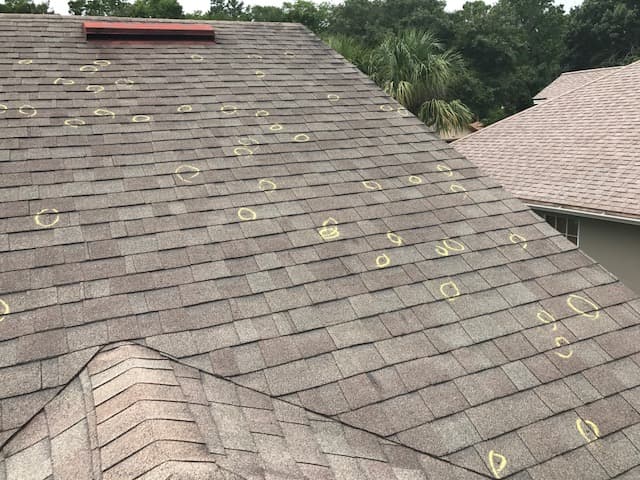
Most roof inspections use test squares: a 10 by 10 foot area marked on each slope, with the hail impacts inside it counted. Many carriers treat a slope as damaged only when the count passes a threshold, often around 8 to 10 hits per square, and pay for the slopes that pass. That makes it essential that every slope is tested, including the ones facing away from the storm, and that the squares are representative rather than placed on the least damaged sections.
Collateral damage tells the story
Soft metals record hail better than shingles do. Dents in gutters, downspouts, roof vents, flashing, air conditioner fins and window screens show the size and direction of the hail and help tie the damage to a specific storm. Photograph them with a coin or tape measure for scale before anything is repaired. In general, hail around one inch across and larger is what starts to damage asphalt shingles, and larger stones do more.
Proving the date of the storm
Insurers often argue that roof damage is old or came from a storm outside the policy period. Storm records answer that. The National Weather Service and NOAA's Storm Events Database log hail reports by date and location, and private hail mapping services estimate hail size at a specific address. A date of loss backed by those records, together with photos taken soon after the storm, is far harder to dispute.
Texas deadlines that matter
Many Texas homeowners policies set a deadline for reporting wind and hail damage, commonly one year from the storm, so check yours and report promptly. Once a claim is reported, Texas prompt payment rules give the insurer set times to acknowledge it, decide it and pay it. And under Chapter 542A of the Texas Insurance Code, a homeowner who intends to sue over a weather related claim, including hail, must generally give the insurer written notice at least 61 days before filing suit.
Class 4 roofs
Shingles rated Class 4 under the UL 2218 impact standard resist hail better, and many Texas insurers offer a premium discount for them. If your roof is being replaced after a hail claim, ask your insurer what the upgrade would save you, and ask your contractor for the rating in writing.